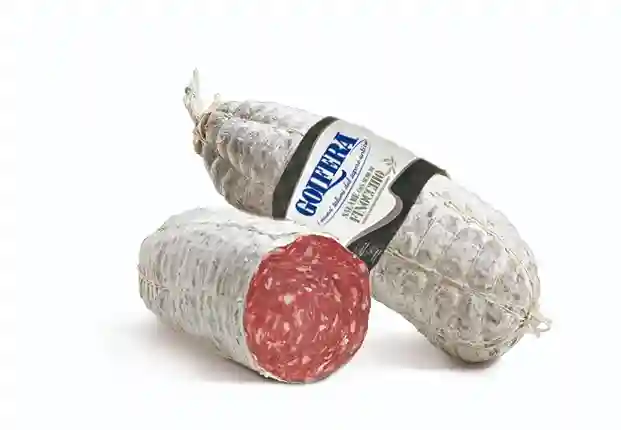
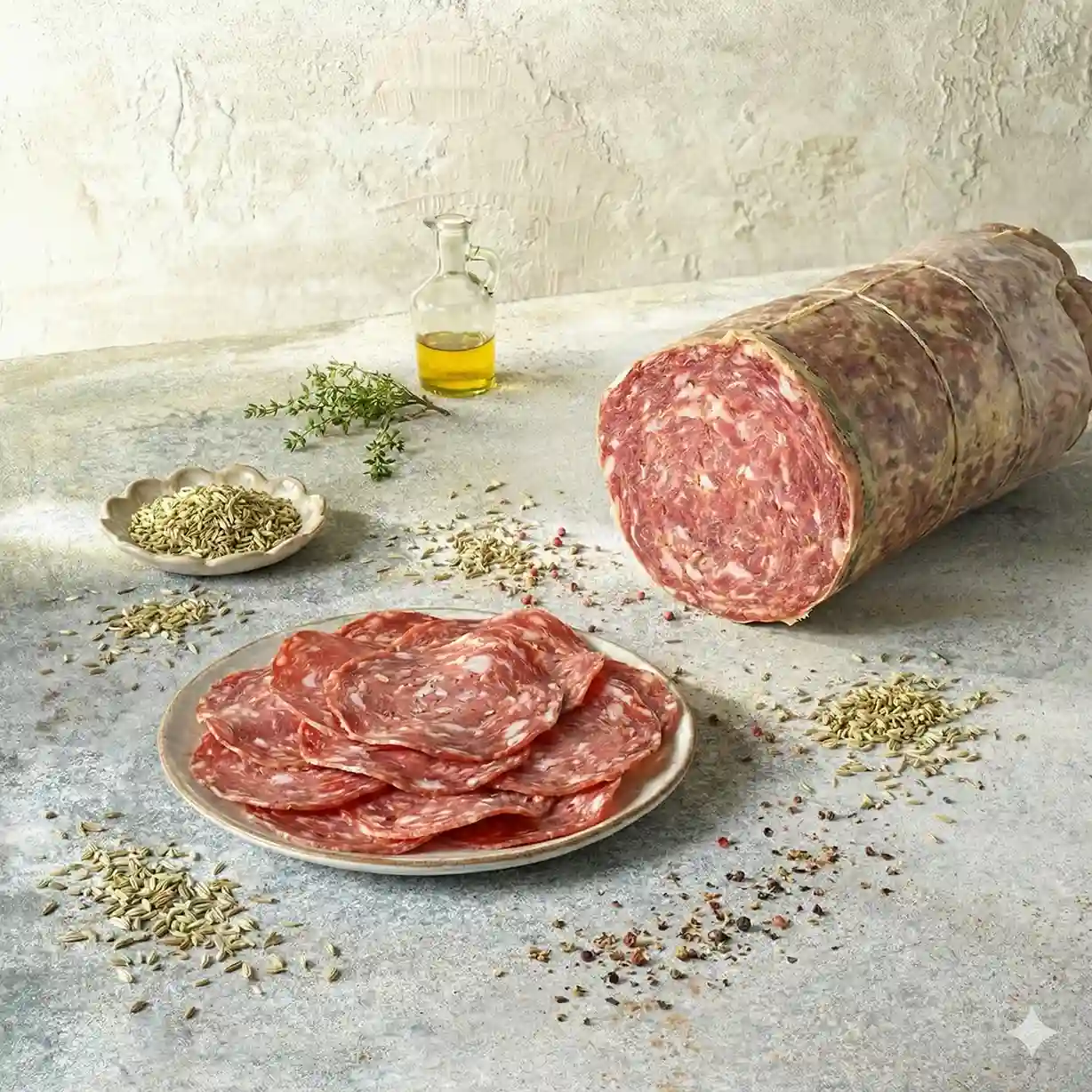
Golfera’s Fennel Salami is crafted from carefully selected pork cuts, including cheek, shoulder, and belly, then seasoned with fennel seeds, red wine, salt, and pepper. Then it undergoes a traditional fermentation process before being aged for a minimum of five months.
• Grain: Medium
• Average Weight: 6 lbs
• Packaging: Vacuum-sealed.
Golfera’s Fennel Salami was born out of necessity and ingenuity, as it dates back to Tuscany during the Late Middle Ages or the Renaissance. Black pepper, a key ingredient in traditional salami, was an expensive commodity, while wild fennel grew abundantly in the Tuscan countryside, making it a natural substitute. Over time, fennel became an excellent ingredient and a defining feature. Winemakers in Chianti were known to serve fennel salami to their guests before wine tastings, as fennel’s mild anesthetic properties helped mask the imperfections of lower-quality wines.
Yes, it’s inspired by the traditional “Finocchiona” of Tuscany.
The recipe dates back to the Renaissance in Tuscany. At that time, black pepper was a luxury commodity, while wild fennel grew abundantly in the countryside. Artisans ingeniously used fennel as a flavorful substitute, creating a tradition that persists today. Interestingly, Chianti winemakers historically served it to mask the imperfections of lower-quality wines due to fennel's mild anesthetic properties.
This premium salami is made from carefully selected pork cuts, including cheek, shoulder, and belly. The meat is seasoned with wild fennel seeds, red wine, salt, and pepper. It undergoes a traditional fermentation process and is then aged for a minimum of five months to ensure a complex depth of flavor.
Unlike spicier salamis, Golfera Fennel Salami offers a mildly sweet and fragrant profile. The sweetness of the fennel seeds is perfectly balanced by savory pork notes and a hint of red wine, resulting in a smooth taste that lingers pleasantly on the palate.
To honor its heritage, this salami pairs beautifully with Pecorino Toscano, Parmigiano-Reggiano, or aged Asiago cheeses. For wine, we recommend a classic Chianti, Sangiovese, or a light, earthy Pinot Noir to complement the herbal notes of the fennel.